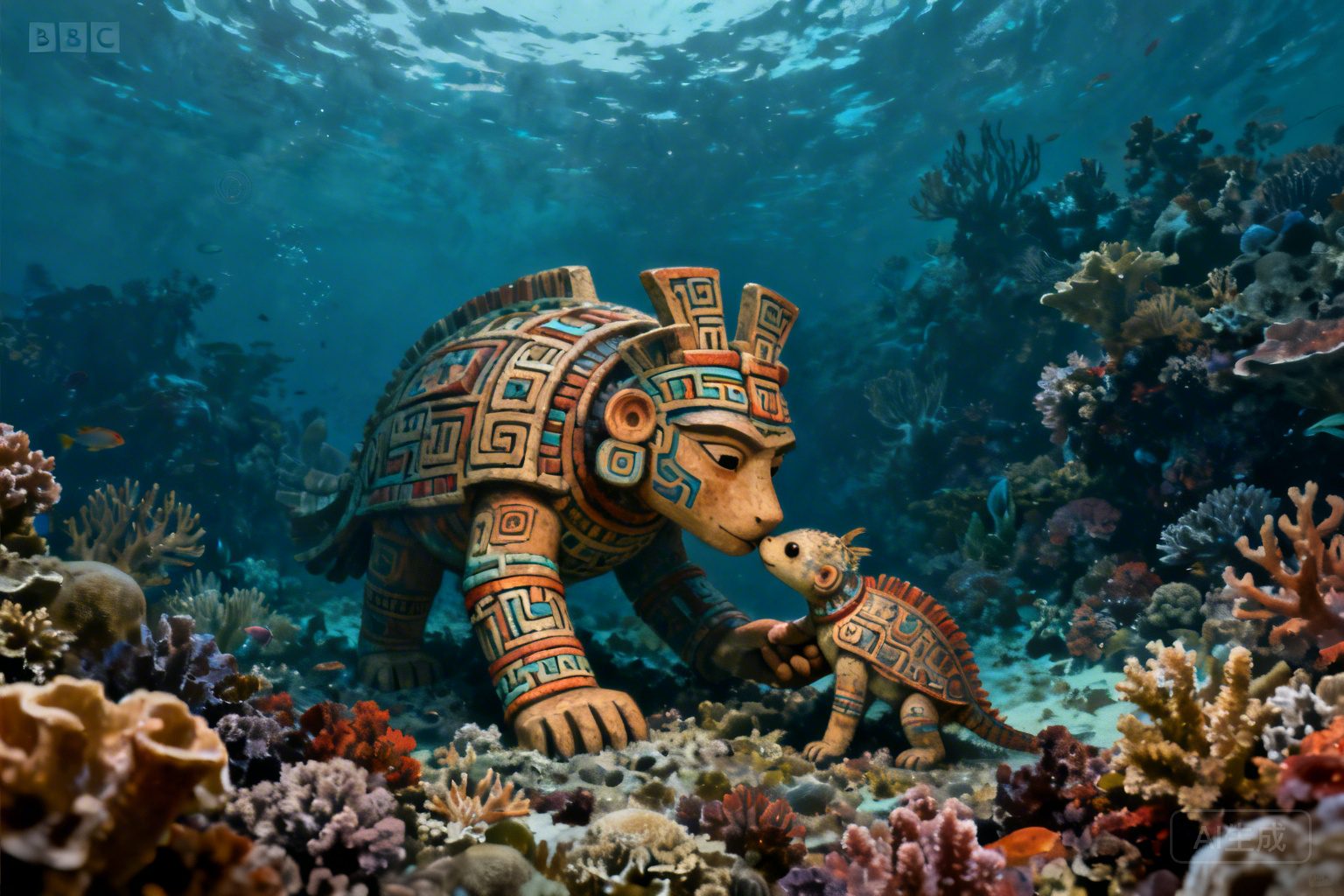
10 quantum physics Facts Worth Losing Sleep Over
Have you ever looked at your hands and realized that you are essentially made of ghostly, vibrating energy that doesn’t follow any of the rules of the “real” world? It sounds like the plot of a late-night sci-fi marathon on Netflix, but according to the brilliant minds at NASA and CERN, it’s just our basic reality. Quantum physics is the study of the teeny-tiny building blocks of the universe—the subatomic particles like electrons and photons that make up everything you see, touch, and smell. However, the closer we look at these particles, the more we realize that the universe is far weirder than we ever dared to imagine. These fun facts about quantum physics aren’t just academic trivia; they are the fundamental blueprints of existence that challenge every “logical” bone in your body.
Why should you care about things so small you can’t even see them with a microscope? Because without the bizarre behavior of these particles, your smartphone wouldn’t work, the sun wouldn’t shine, and you quite literally wouldn’t exist. Scientists like Albert Einstein and Richard Feynman spent their entire lives trying to wrap their heads around these facts about quantum physics, often walking away more confused than when they started. It’s a world where things can be in two places at once, where particles “talk” across galaxies instantly, and where the simple act of looking at something actually changes its physical state. It is the ultimate “glitch in the Matrix,” and it’s happening inside your cells right this second.
In this deep dive, we are going to explore the most mind-melting facts about quantum physics that will make you question the very fabric of the chair you’re sitting on. From the famous cat that is both dead and alive to the spooky connections that defy the speed of light, we’ve rounded up the top ten concepts that keep physicists awake at night. Whether you’re a science nerd or just someone who loves a good existential crisis, these revelations are guaranteed to shift your perspective. Get ready to leave the “common sense” world behind as we venture into the quantum realm, where the impossible is just another Tuesday. Here is why the subatomic world is the most chaotic, beautiful, and absolutely terrifying place in the known universe.
The Particle That Lives Double Lives
In the quantum world, objects don’t settle on a single location until you force them to by taking a look. This concept, known as superposition, suggests that a particle like an electron exists in a hazy cloud of “probabilities,” being in multiple places or states simultaneously. Imagine tossing a coin and having it spin on the table; while it’s spinning, it’s neither heads nor tails, but a blur of both. In the macroscopic world we inhabit, things eventually land, but in the quantum realm, that coin could theoretically spin forever until an observer steps in. It’s not just a theory, either; experiments at the National Institute of Standards and Technology (NIST) have successfully demonstrated ions existing in two different states at once, separated by distances that our eyes could actually perceive if we were small enough. Can you imagine living a life where you are both at work and on a beach in Hawaii until your boss checks your Slack status?
This reality-bending behavior was famously illustrated by Erwin Schrödinger’s thought experiment involving a cat in a box. According to the math, until the box is opened, the cat is mathematically both 100% alive and 100% dead. While it sounds like a cruel joke, this is one of the most fundamental facts about quantum physics that powers modern technology. Without superposition, we wouldn’t have the concept of quantum computing, where “qubits” can process a 1 and a 0 at the exact same time. This allows machines to solve problems in seconds that would take a standard MacBook thousands of years to crunch. It’s a reminder that at the most basic level, the universe is indecisive, preferring to keep its options open until the very last second. This fluid nature of reality is why many experts believe we are only scratching the surface of what the universe is truly capable of doing.