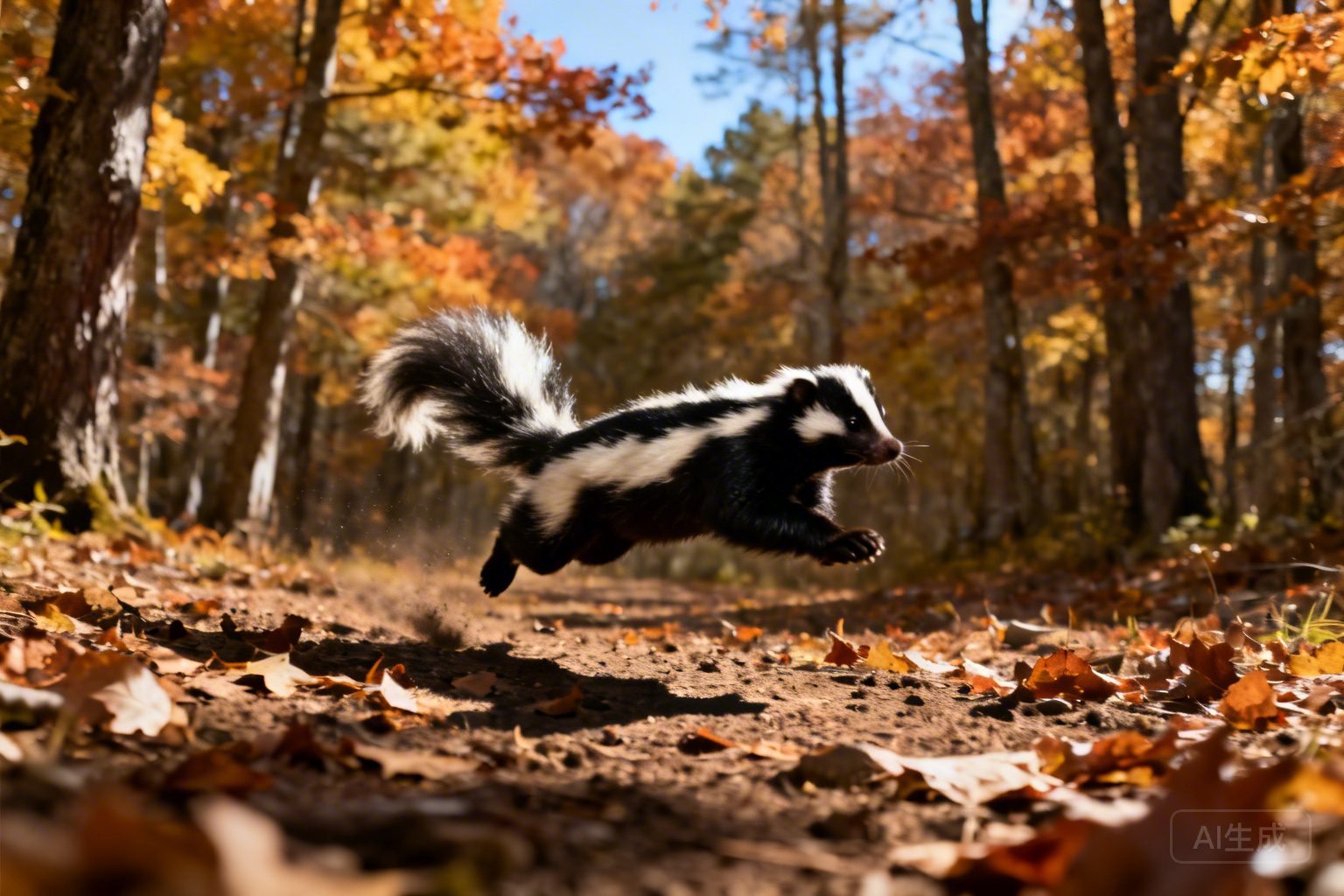
These 10 skunks Details Are Actually Real?!
Have you ever been driving down a quiet country road at night, only to be hit by a scent so powerful it practically melts your eyeballs? We’ve all been there, holding our breath and frantically hitting the recirculate button on the AC. Skunks are the ultimate “love them from a distance” animals of the American backyard.
But beyond that infamous, eye-watering spray, these black-and-white critters are actually some of the most misunderstood and fascinating neighbors you’ll ever encounter. From their surprising intelligence to their complex social lives, there is so much more to them than just a bad smell. These facts about skunks will completely change your perspective on the neighborhood stinker.
Are you ready to dive into the secret world of these striped enigmas and learn why they are actually the unsung heroes of our ecosystem? We have gathered the most mind-blowing, weird, and surprisingly relatable fun facts about skunks that you probably never heard in biology class. Let’s explore these ten incredible details that prove skunks are actually quite cool.
The Chemical Warfare Masterpieces
The most famous thing about a skunk is, obviously, its ability to turn any predator into a social pariah within seconds. This oily liquid is produced by two marble-sized glands located right near the tail. It’s not just “stinky water”; it is a complex chemical cocktail of sulfuric compounds called thiols that can be detected by humans a mile away.
Think of it as a biological superpower that allows a creature the size of a house cat to scare off a grizzly bear. According to National Geographic, skunks can accurately spray a target up to 15 feet away with terrifying precision. They don’t just fire blindly; they aim for the face to cause temporary blindness and intense irritation.
Have you ever wondered why they don’t just spray everything that moves? It’s because producing this chemical “ammo” takes a huge amount of metabolic energy. A skunk only carries enough for about five or six consecutive shots, and it can take up to ten days to “reload” their supply. This makes the spray a last-resort defensive weapon.